

HOW AI ELEVATES — BUT WILL NEVER REPLACE — THE INSTINCT OF AN EVENT PLANNER

Updated: Sep 2
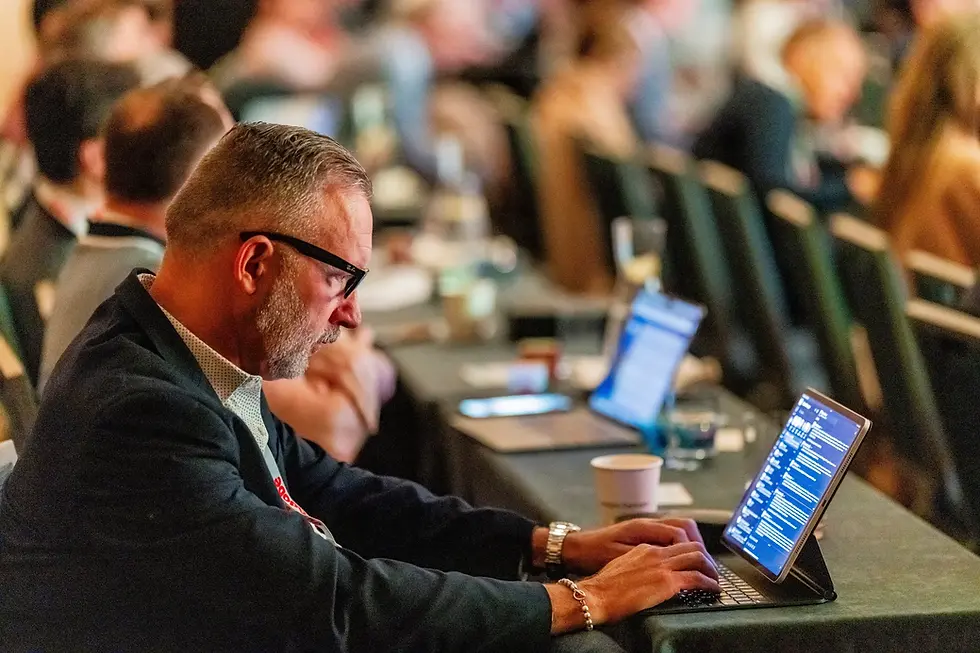
LEADING PLANNERS ARE PAIRING CUTTING-EDGE ARTIFICIAL INTELLIGENCE WITH HUMAN INTUITION TO BUILD SEAMLESS, HIGH-IMPACT EVENTS.
While the global conversation around artificial intelligence often moves between excitement and anxiety, event producers understand one thing clearly: live events are far too dynamic to ever be run entirely by AI. That’s because events are vibrant, ever-evolving environments defined by creativity, intuition and countless X-factors — from last-minute schedule shifts to sudden weather disruptions.
However, AI is playing a growing role in how we plan. According to the15th Annual Global Meetings and Events Forecast by American Express Global Business Travel, 50% of planners are now actively integrating AI across the event production lifecycle. The intention isn’t to replace people but to remove the layers of administrative work that keep talented professionals buried in spreadsheets. AI creates some freedom to stay focused on strategy, creativity and problem-solving.
Think of AI as having an incredibly eager, brilliant intern on your team. They can shoulder a substantial amount of the administrative load, but they still require clear instruction, thoughtful guidance and an experienced eye to validate their output. The difference is speed: reviewing and refining an AI-generated solution is far more efficient than building it manually from scratch. In that sense, AI becomes a powerful accelerator — not a substitute — for expertise.
Ultimately, AI’s value lies in how it supports the planning process so we can bring the events to life.
HOW WE’RE USING AI FOR EVENT PLANNING
Building Knowledge Hubs
One of the most valuable applications of AI is the creation of secure, centralized project workspaces. By uploading an event’s master spreadsheets, vendor contracts, AV contracts and run-of-show into an AI project or an Agent*, teams can create highly searchable, real-time knowledge hubs.
Planners can ask direct questions like, “Where is the afternoon breakout session and what is the room setup?” and receive answers in seconds. It keeps teams aligned and operations moving seamlessly with fewer emails and meetings.
*An AI Agent is a tool that can carry out tasks on its own — taking actions based on instructions, not just answering questions.
Creating Operational Templates
AI tools excel at organizing data, allowing planning teams to automate processes. You can generate templates — complex rooming lists and dynamic budget trackers — while cross-checking variables like dates, room types and dietary needs.
We used this for a recent multi-day conference with a highly complex budgeting structure. Instead of managing a static budget, the client needed a tracker that could quickly show per-person costs, per-day breakdowns or audience-specific spend. By building an AI-driven template, we were able to process these report variations in seconds. It entirely replaced the slower and less reliable process of manual data entry and layered Excel formulas.
Scaling Communications
Building and executing a comprehensive communication plan to keep guests, speakers and stakeholders informed is both time-intensive and critical to an event’s success. AI allows planners to take a single approved content schedule and efficiently adapt it across multiple audiences and channels.
For a recent large-scale event, we needed tailored communications for six different attendee types. Using a custom AI agent — a system trained to generate content based on specific inputs — we fed in the communication schedule and core messaging, and it produced personalized, audience-specific outreach. The result was the best of both worlds: the tone and relevance of a tailored message, delivered with the speed and efficiency of automation, ensuring every stakeholder remained consistently informed in the lead-up to the event.
THE IRREPLACEABLE VALUE OF HUMAN EXPERTISE IN EVENT PLANNING
While AI has been instrumental in making event planning faster — reducing manual entry, streamlining workflows and eliminating administrative burdens — there are critical areas where technology simply cannot replace human instinct, judgment, nuance and intuition.
Understanding Context Beyond the Data
Experienced planners often navigate unspoken dynamics… A leader who prefers control but wants to appear collaborative. A brand that says “bold” but historically avoids risk. Stakeholders with competing priorities that aren’t formally documented.
This limitation extends to content as well. AI tends to generate polished but predictable messaging. It’s safe, familiar and often indistinguishable from everything else. Attendees may not always be able to explain it, but they can feel when something lacks originality and soul.
These same contextual layers influence everything from agenda design to speaker selection. Professional event planners recognize and adapt to these realities instinctively in a way that AI will never be able to replicate.
Sensing Room Vibrations
Today’s event technology can capture an extraordinary level of real-time insight. Planners can track second-by-second attendance data through badge or QR-code scans, monitor digital app engagement during sessions and measure everything from session drop-off rates to audience interaction, all in real time.
While this data provides valuable visibility into participation and flow, it doesn’t capture how a room actually feels. An experienced event producer can stand in the back of a ballroom, notice that the audience's attention is fading, and make the call to switch up stage lighting, adjust room temp or transition a monotonous panel discussion into a lively Q&A session. These decisions rely on instinct and observation, not data.
On-the-Ground Crisis Management
AI can plan for known variables, but it cannot navigate real-time disruption, especially when decisions carry immediate operational consequences. When a flight delay leaves the keynote presenter stranded minutes before general session begins, there is no system capable of seamlessly recalibrating the experience.
Navigating change requires a human planner to quickly restructure the program flow, coordinate with venue staff, adjust room logistics and guide the schedule forward, often without the audience ever realizing there was a disruption. This ability to adapt under pressure is built on experience, relationships and decisive judgment in the moment. These factors cannot be predefined or automated.
OUR KEY TAKEAWAY
AI is transforming how events are planned, replacing repetitive spreadsheets, reducing administrative burden and accelerating workflows that once consumed valuable time. But its strength lies in execution, not interpretation.
The reality is that great events are not built on efficiency alone. They are shaped by judgment calls, human dynamics and real-time decision-making — none of which can be fully anticipated, automated or delegated.
By offloading the mechanical elements of planning to AI, experienced event professionals are freer than ever to focus on what truly matters: designing and delivering meaningful, high-impact experiences that connect with people and move organizations forward.
If you’re looking for a team that knows how to balance technology with real-world expertise, BDI is here to help.


